
Drawing and techniques
Learn to see before you draw
Confidence in drawing grows from short, regular observation exercises and steady mark-making. This guide opens with simple method, not special equipment.
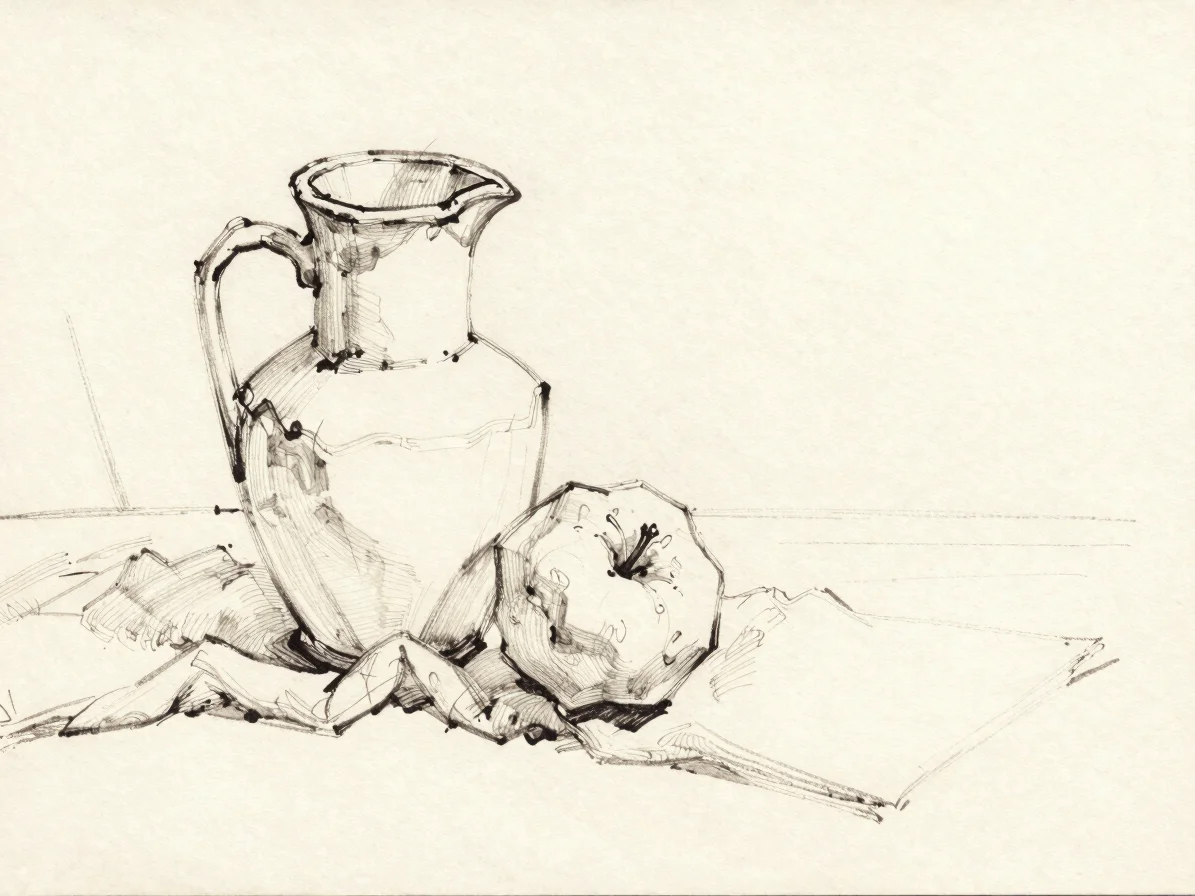
Foundations
Three steps to a steadier line
01
Contour observation
Trace the outer edge of a single object without lifting the pencil. Look at the subject far more than at the paper, and let the line record what your eye follows.
02
Line weight modulation
Press harder where a form turns away from light, and lighten the pressure where the surface flattens. Two or three pressures are enough to give a drawing depth.
03
Basic tonal blocking
Divide the subject into three simple values: light, middle, and shadow. Fill each area with flat tone before refining any detail, so the form reads clearly.
Practice tips
Everyday tools, steady progress
You do not need a studio to improve. These habits and simple materials are enough to build a lasting drawing practice.
Graphite
Use one pencil
Graphite is forgiving and lets you adjust values easily. Start with a single HB or 2B pencil to learn pressure before adding other materials.
Ink
Draw with a pen
A fineliner forces decisions, because each line stays on the page. Practise short hatching strokes to see how density builds tone.
Gouache
Block in color
Gouache is opaque and matte, so you can layer and correct shapes. Try covering a small sheet with two flat colors before adding detail.